Hoarding clearance in the East End of Glasgow
Dennistoun through Shettleston and Tollcross out to Baillieston and Garrowhill. Access here is generally kinder than in the West End, which changes what a clearance costs and how quickly it can be done — but the mix of tenement, high-rise and post-war housing means the plan still has to fit the building.
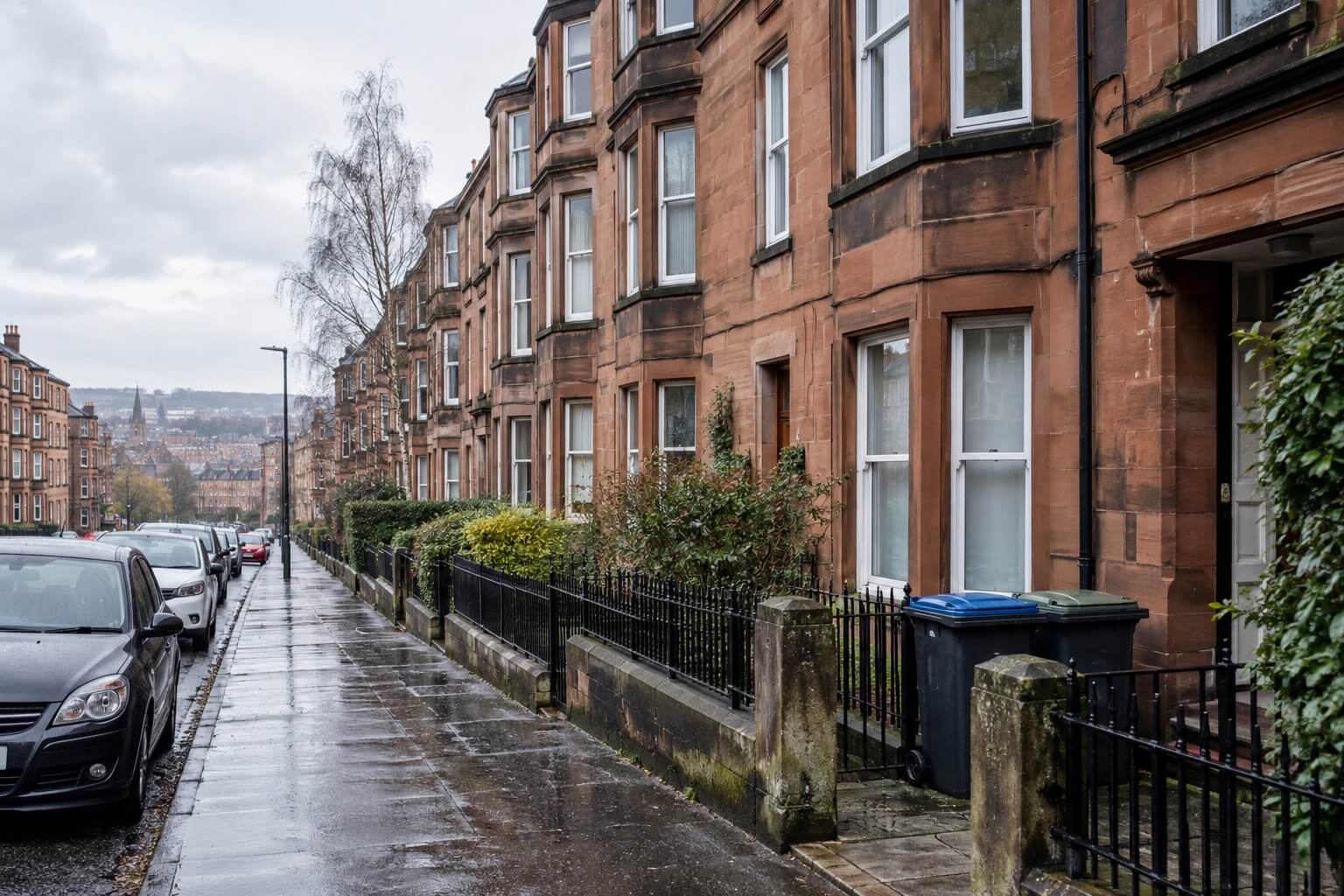
The property here
Dennistoun and Haghill give us classic tenement work — sandstone closes off Duke Street and Alexandra Parade, bay windows, box rooms, shared back courts and drying lofts. Further east, from Shettleston and Carntyne out to Baillieston, the stock shifts towards interwar and post-war semis, four-in-a-blocks, cottage flats and terraces, most with a garden, many with a driveway or a shed, and some with a garage or an outhouse.
There are also mid-rise and high-rise blocks across the area, and those need their own plan: a controlled entry, a lift that must not be tied up for long, corridors shared with dozens of households, and a bin store or loading bay that may be some distance from the door. We time high-rise work around lift availability and check in advance whether the housing association or factor wants notice. That single call often prevents the day going wrong.
The practical upside across most of the East End is space. Where a van can get onto a driveway or sit on a quiet street directly outside, the carry is short, the work is faster and the cost comes down accordingly. Cottage flats and four-in-a-blocks with one internal stair are among the most straightforward clearances we do. Where the volume hides instead is in sheds, garages, outhouses and lofts — small buildings that hold a surprising amount once you start emptying them.
Access, parking and neighbours
Dennistoun’s grid can be tight in the evening but is usually workable during the day, and most streets are not permit-controlled in the way the West End is. Out towards Shettleston, Tollcross, Mount Vernon and Baillieston, parking is rarely the limiting factor — the questions are whether there is side access to the back garden, whether a shed or garage can be reached without going through the house, and whether the driveway takes a van.
In tenements and blocks, the shared-space rules are the same as everywhere: protected floors, nothing left in the close or the corridor between runs, a door not held open longer than needed, and the bin store left usable. In high-rise blocks we also keep the lift free between loads rather than holding it, because that is what makes a clearance tolerable for everyone else in the building.
Discretion still matters in areas where people know their neighbours well. Unbranded bags, no conversation about the job outside the property, and no photographs shared anywhere. Where a garden is visible from neighbouring houses, we bag and load rather than staging material out in the open for hours.
Neighbourhoods we work in
How the day runs
Scope confirmed before we arrive
Which rooms, whether the shed, garage, outhouse and loft are included, and where the van will sit. For a flat in a block, whether the housing association or factor needs notice.
Keep items separated first
One agreed room or corner for everything staying, and documents, photographs, keys and medication moved there before any clearing starts.
Interior, then outbuildings
Hall and route first, then room by room, then shed, garage and loft. Garden material is bagged and loaded rather than piled where neighbours have to look at it.
Separated at the van, not at the tip
Reusable items, recyclables, electricals and general waste are kept apart as they are loaded, which is what makes proper reuse and recycling possible rather than aspirational.
Finish, walkthrough, paperwork
A walk round with you, our equipment away, and waste transfer detail or before-and-after photographs where a landlord, housing officer or estate file needs them.
Tenancies, housing associations and support workers
A good share of East End enquiries come through housing officers, support workers and family members rather than from the household directly, often where a tenancy is at risk or a safety concern has been raised. We are used to that. What we need is clarity on who holds authority for the property, how access is arranged, and whether the tenant is part of the plan.
Where somebody is still living there and wants to sustain the tenancy, we would much rather work with them than around them — a first visit that clears escape routes, the kitchen and the bathroom often addresses the immediate risk and buys time for the rest to be done properly. Where a property is void and being turned around, we can work to an inspection date and provide the documentation your file needs.
Either way, the household is treated the same. No comment, no photographs shared, no conversation in the corridor. People remember how they were spoken to long after they have forgotten how many bags left the flat.
Cottage flats, four-in-a-blocks and terraces
A large part of the housing between Carntyne and Baillieston is the four-in-a-block and cottage-flat pattern: two flats at ground level, two above, one internal stair, a front path and usually a share of garden at the rear. These are among the most practical clearances we do. The stair is short, the doorways are generous by tenement standards, and a van can normally sit close enough that a carry is measured in metres rather than flights.
What they do have is a lot of storage for their size — a hall press, a bedroom cupboard, an under-stair space in the upper flats, a loft hatch, and very often a shed or a coal store outside. On a heavily filled property those spaces can hold as much as the living areas put together, and they are the part people forget to mention when they describe the job. We ask about each of them specifically at quote stage.
Interwar terraces and semis around Riddrie, Sandyhills and Garrowhill add a driveway, a bigger garden and sometimes a garage, which usually means an easier day inside and a heavier day outside. Timber, paving slabs, old garden furniture and bags of soil are all clearable, but they are bulk waste rather than household contents, so we price them as such rather than absorbing them into a room count.
Doing it in stages
Where somebody is living in the property and wants a say in what stays, a staged clearance is almost always the better choice. A first visit can deal with the things that matter most for safety and daily life — hallway and escape routes, kitchen, bathroom, a path to the bed — and leave the household with a home that works while the rest is planned calmly.
Later visits take bedrooms, storage and then outbuildings. Each stage is quoted separately so you always know what the next step costs before you agree to it, and stopping after any stage is fine. In our experience a property cleared in three planned visits stays clear far more often than one emptied in a single day.
What affects the price in the East End
Carry distance and floor level — driveway access is the cheapest scenario we quote; a high-rise with a shared lift is slower.
Whether sheds, garages, outhouses and lofts are included.
Volume and weight of material, and how much of it needs sorting rather than simply removing.
Special-handling items: fridges and freezers, mattresses, tyres, paint, garden chemicals, rubble.
One visit or a staged sequence, and whether a specific deadline has to be met.
We quote per property, in writing, before a date is booked. If the scope turns out to be different from what was described, we stop and agree the change with you instead of adding it on afterwards.
Questions we get asked about East End jobs
Can you clear a flat in a high-rise block?
Yes. We plan around lift availability, keep the corridor clear and check whether the housing provider wants notice beforehand.
Can a housing officer or support worker arrange this?
They can arrange the quote and be our contact throughout. Before clearing we need permission and access from whoever holds authority for the property.
Do you clear gardens, sheds and garages?
Yes, and they are worth naming in the enquiry. They are a different waste stream from household contents, so including them upfront keeps the quote accurate.
Can you do just one room to start with?
Yes. A single room, or just the escape routes and the kitchen, is a perfectly sensible first job — and often the right one.
How much notice do you need?
It varies with the size of the job and the time of year. Tell us the date you are working to when you enquire and we will be straight with you about whether we can meet it.
Clearing a property in the East End?
Tell us the postcode, the property type and whether outbuildings are involved. Call 07789 998 938 or send a private enquiry and we will come back with a plan and a written figure.