Hoarding clearance in Clydebank and west Glasgow
Scotstoun and Knightswood through Drumchapel and Yoker to Clydebank, Duntocher and Old Kilpatrick. Cottage flats, four-in-a-blocks, post-war terraces and a number of high-rise blocks — the west of the patch is where building type decides the job more than volume does.
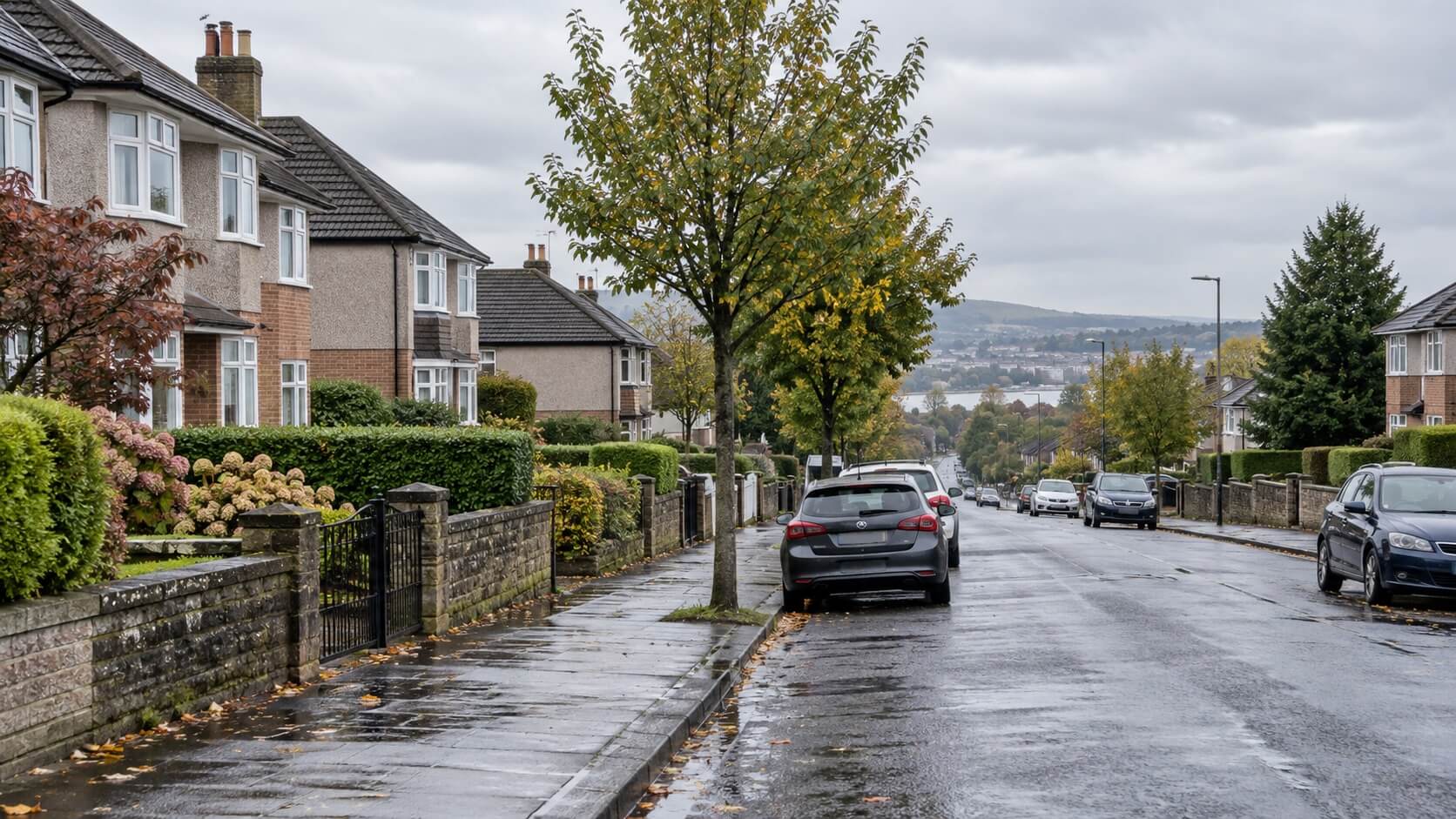
The property here
Knightswood is dominated by interwar cottage flats and four-in-a-blocks laid out around wide streets and generous gardens — two flats at ground level, two above, one short internal stair, a front path and a share of garden at the rear. Scotstoun and Whiteinch add tenement terraces and post-war blocks; Yoker, Drumchapel and Faifley bring a mix of four-in-a-blocks, terraces and mid- or high-rise flats; Clydebank, Duntocher and Old Kilpatrick add post-war semis and terraces, many with driveways and sheds.
Cottage flats and four-in-a-blocks are, in practical terms, the most straightforward clearances we do anywhere. The stair is short, doorways are wider than in a tenement, and a van can usually sit close to the path. What surprises people is how much storage these homes have for their size: a hall press, a bedroom cupboard, an under-stair space in the upper flats, a loft hatch, and very often a shed, coal store or outhouse in the garden. Filled, those spaces can hold as much as the living rooms put together.
The high-rise and mid-rise blocks are a different exercise entirely: controlled entry, one or two lifts shared with dozens of households, a long internal corridor, and a bin store or loading area some distance from the door. We plan those jobs around lift availability and give the housing provider notice where they ask for it. A great deal of the work across this area is housing association stock, so that call is often the first one we make.
Access, gardens and shared space
Parking is rarely the constraint here, which is genuinely good news for cost — a short level carry is the single cheapest scenario we quote. The questions we do ask are whether there is side or rear access to the garden, whether a shed or outhouse can be reached without carrying through the house, whether the loft is reached by hatch or ladder, and in upper cottage flats whether the internal stair will take large furniture whole or needs it dismantled in the room.
Gardens matter more in this area than in most. Knightswood, Duntocher and Old Kilpatrick properties often have deep back gardens holding years of accumulated material — timber, fencing, old furniture, bags of soil, a collapsed shed or greenhouse. It all clears, but as bulk waste with its own disposal route, so we would rather price it upfront than discover it on the day.
Shared space is respected everywhere: protected floors and stair edges, nothing left in a close or corridor between runs, the lift kept free between loads, bin stores left usable, and shared drying areas exactly as we found them. In blocks we work in runs rather than holding a lift for an hour, because that is what makes the day tolerable for everyone else living there.
Discretion is straightforward but deliberate. Unbranded bags, loading at the rear where a garden allows it, no material staged in a front garden for hours, no discussion of the job on the path, and no photographs shared with anyone at any point.
Areas we work in
How the day runs
Scope confirmed, notice given
Rooms named, loft, shed and garden in or out, van position agreed, and any notice the housing association or factor wants already arranged.
Keep items first
One agreed space for everything staying. Documents, photographs, keys, bank papers and medication are moved there before clearing begins.
Route, then rooms
Hall, stair and doorways cleared first, then one room completed properly at a time so progress is visible.
Presses, loft, shed and garden
Storage spaces and outbuildings after the living areas, with proper loft access rather than working off a hatch.
Separated at the van
Reuse, recycling, electricals and general waste kept apart while loading, under our waste carrier licence.
Walkthrough and records
A walk round with you, equipment away, and photographs or waste paperwork where a housing or estate file needs them.
Housing associations, tenancies and support workers
Much of the stock across Drumchapel, Faifley, Yoker and Clydebank is housing association owned, and many enquiries come through a housing officer, a support worker or a family member rather than the household. Often there is a trigger: a repair that cannot be carried out, a safety inspection, a pest issue, or a tenancy under threat.
We work with that readily, provided authority and access are clear and we know whether the tenant is part of the plan. Where someone is living there and wants to keep their home, the most useful first visit is a targeted one — escape routes, kitchen, bathroom, a clear path to the bed. That usually answers the immediate concern and creates space to plan the rest without panic.
For void properties we can empty and sweep ready for inspection or for trades, separate out documents and keys rather than binning them, and provide the paperwork your file needs. Either way the household is treated the same: no comment, no photographs shared, no conversation in the corridor about why we are there.
Doing it in stages
Staged clearances work particularly well in this area because the properties divide naturally — garden and shed in one visit, living areas in another, storage and loft in a third. That gives visible progress early without anyone’s living space being touched on day one, which matters when trust is still being built.
Each stage is quoted separately and openly, and stopping after any of them is fine. In our experience a property cleared across two or three planned visits stays clear far more reliably than one emptied in a single long day.
Estates, executors and properties being sold
A good number of clearances here follow a death or a move into care. Many Knightswood, Duntocher and Old Kilpatrick homes have been held by the same family since they were built, and the contents reflect that: decades of paperwork, photographs and letters, tools and workshop material, inherited furniture, and occasionally items of real value sitting among general clutter.
Those jobs are slower by design. We work carefully through anything that might matter — documents, photographs, jewellery, medals, small valuables — and hand it to you rather than deciding on your behalf. If you want something valued, we leave it in place for a specialist instead of removing it. Where several relatives are involved and not all are local, we take instruction from one named contact and keep the agreed scope in writing so everyone can see what was covered.
Where a solicitor, executor or selling agent is coordinating, we will deal with them directly, work to an entry or viewing date, and provide before-and-after photographs plus waste transfer detail for the file.
What affects the price in this area
Building type — a cottage flat with a short carry is the cheapest scenario; a high-rise with a shared lift is the slowest.
Whether presses, loft, shed, outhouse and garden are included.
Volume and weight, and how much sorting you want done alongside removal.
Bulk garden waste, which is a separate stream from household contents.
Special-handling items: fridges and freezers, mattresses, paint, chemicals, electricals, rubble.
One visit or a staged sequence, and any inspection or re-let deadline.
Photographs or a short video walk from the front door get us much closer than a phone description. Whatever we quote is confirmed in writing before a date is booked, and it does not change unless the scope does and you have agreed it.
Questions we get asked here
Do you cover Clydebank and Old Kilpatrick?
Yes — both sit inside our ten-mile radius, as do Duntocher, Hardgate and Faifley. Bowling is around the edge; phone and we will confirm.
Can you clear an upper cottage flat with large furniture?
Yes. Where a wardrobe or sofa will not come down the internal stair whole, we dismantle it in the room rather than forcing it through a doorway.
Will you clear the back garden and shed too?
Yes, and mention it when you enquire so it is priced properly. Gardens in this area often hold more than the house does.
Can my housing officer arrange it?
Yes. They can arrange the quote and be our contact, as long as permission and access are in place from whoever holds authority for the property.
Can we start with one room?
Yes, and it is often the right first step. A single room or just the escape routes and kitchen costs a fraction of a full clearance and changes daily life quickly.
Clearing a property in Clydebank or west Glasgow?
Tell us the postcode, the property type, and whether a loft, shed or garden is involved. Call 07789 998 938 or send a private enquiry.